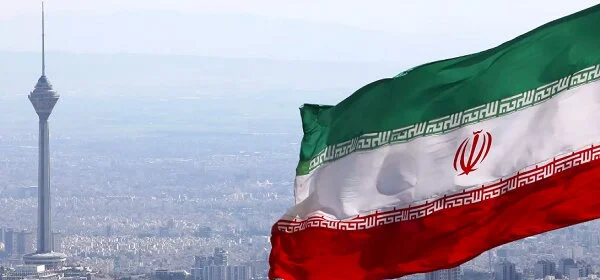
Iran's war performance challenges US military base network in West Asia, report says
A Mehr News analysis says Iran's attacks have raised the cost of US military presence by targeting base infrastructure, prompting Washington to review its regional posture.
Published on 25 November 2026
SaveIran's war performance challenges US military base network in West Asia, report says
For decades, the United States assumed that deploying tens of thousands of military personnel, maintaining extensive bases, and possessing air and naval superiority would guarantee the security of its allies and allow it to use military power in West Asia whenever necessary. According to a Mehr News analysis, the war with Iran has seriously challenged this equation. The report argues that the significance of Iran's performance lies not only in damage to American military equipment and facilities but in Tehran's ability to call into question one of the main pillars of US power: the security and effectiveness of its network of military bases in the region. This development is described as a strategic failure that does not necessarily mean the destruction of US military power but rather the increased difficulty of using that power to impose political will on Iran.
The analysis notes that the US maintains about 50,000 military personnel and nearly 19 major military facilities in the Middle East, extending from Bahrain and Qatar to Jordan and Saudi Arabia. It cites an estimate by the US Center for Strategic and International Studies putting the cost of rebuilding damaged infrastructure at these bases at about $9.4 billion. The US naval support base in Bahrain, home to the naval forces command and the Fifth Fleet, has also faced serious damage, with repair costs estimated at more than $400 million. The report argues that a military base is a strategic advantage only when it enables secure deployment, equipment maintenance, command of operations, and sustained support. If an adversary can target these infrastructures, Washington must divert significant resources to protecting bases and compensating for damage, resources that could otherwise expand operational power.
According to the analysis, the strategic importance of Iran's attacks lies in the choice of targets and their effect on the functioning of the US military network. An Associated Press examination of attacks on US bases found that early warning systems and radars were among the primary targets, followed by aircraft hangars, warehouses, communication facilities, and troop deployment locations. Damaging such systems can reduce the efficiency of a base's defense complex and make protecting other equipment more difficult. The report also cites a US Department of Defense Inspector General report on the loss of dozens of aircraft, including attack helicopters and advanced F-35 and F-15E fighter jets. By November, the cost of the war had reached more than $48 billion, a figure that does not include the cost of fully rebuilding the bases.
The analysis points to discussions inside the US about the future of troop deployment in West Asia, with some experts speaking of reducing forces, dispersing facilities, transferring equipment to more distant areas, and even making some centers underground. It says such options show that the traditional pattern of deploying US forces near the Persian Gulf has faced new limitations. Relocating bases would not mean a complete US exit from the region; Washington might use a network of smaller, more temporary, and dispersed bases instead of large fixed facilities, but this change is also costly and limits the ability to carry out rapid and extensive operations. The report adds that transferring facilities farther from Iran does not fully solve the vulnerability issue, as Iran's missile and drone capabilities have given greater depth to its deterrence power.
The analysis further argues that regional countries hosting US bases now face the question of whether that presence increases their security or turns them into part of a confrontation arena. It mentions the joint defense agreement of Saudi Arabia, Turkey, and Pakistan in August 2026 as an example of regional powers seeking more complementary and diverse security options. It also cites a Reuters and Ipsos poll in November 2026 showing that 71 percent of Americans want an end to the war with Iran through congressional action, indicating domestic political limits. The report concludes that Iran has shown US military power in the region is not immune from damage and has increased the cost of maintaining it, forcing Washington to review part of its military arrangement. According to Mehr News, Iran's strategic achievement lies in this change of calculations, challenging a main assumption of the US-led security order in West Asia.
Source: Mehr News — Read original story